Stop after one simple table setting
A plain setting on the table is enough. Extra decor on every surface works against you.
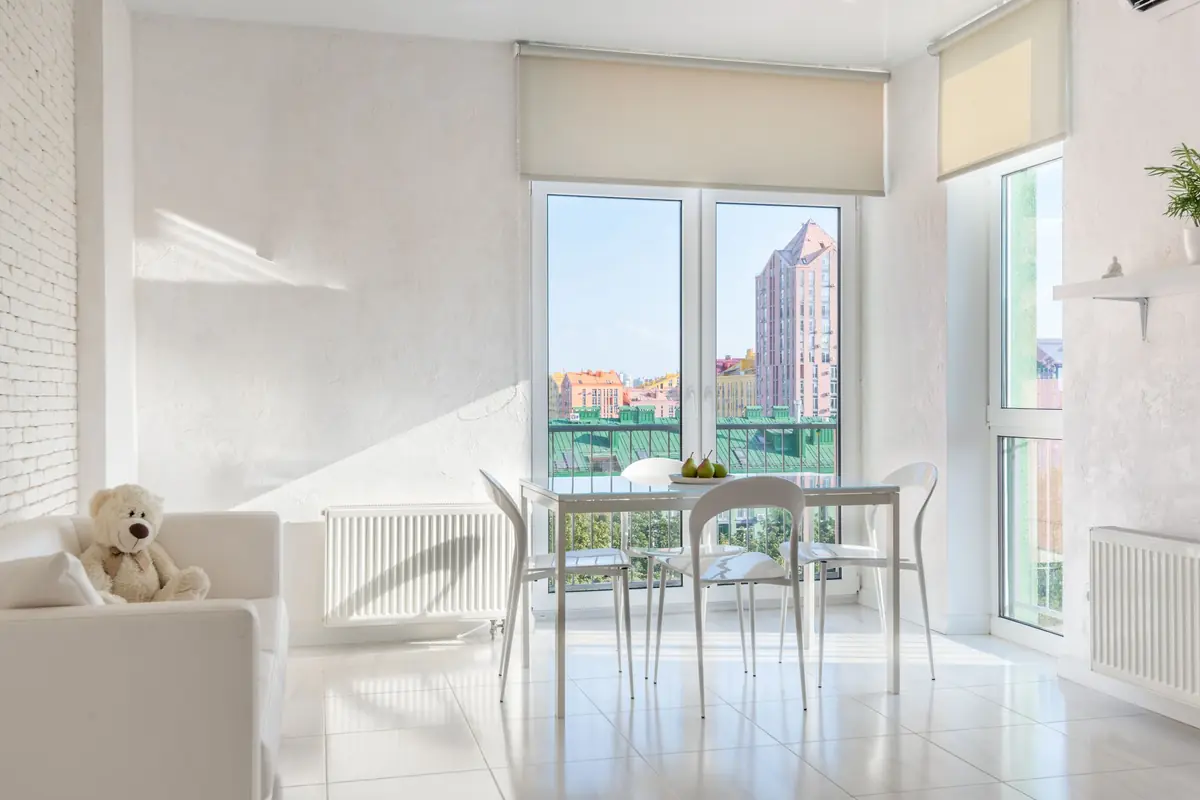
A dining table needs to look like a table, not like a shop display. Set one place for each person who actually lives there, or set none at all if the table is small. A plate, a glass, and a napkin are enough. Stop there. Extra candlesticks, a runner plus a centerpiece plus folded napkins in every glass make the room look arranged and hide the table itself.
You do not need to buy a new set for photos. Use what you already own. If the everyday dishes are chipped, choose the four that are not, and leave the rest in the cabinet. A plain tablecloth you already have can cover a worn top. A new cloth, if you want one, is often $15 to $40. That is optional. The clear table is the point, not the linen.
Look at the chairs next. If a chair blocks the walk from the kitchen to the living room, pull it in or move it out for the showing. An example: six chairs around a table that seats four makes the room feel tight. Two of those chairs can live in a bedroom for the week you are showing the house. Count the path, not the matching set.
On photo day, set the table last, after the counters are clear, so you are not walking dishes back through a finished room. Then leave it. Adding one more object is how a simple setting becomes a pile. If you still eat there between showings, clear the meal and reset the same simple places. The reset should take five minutes.
What to do
- Set only the places you actually use, or leave the table clear.
- Use dishes you already own.
- Move extra chairs that block the walk through the room.
- Reset the same simple places after a meal.