Leave closets partly empty
Take out enough clothes and boxes that a visitor can see the rod and the floor.
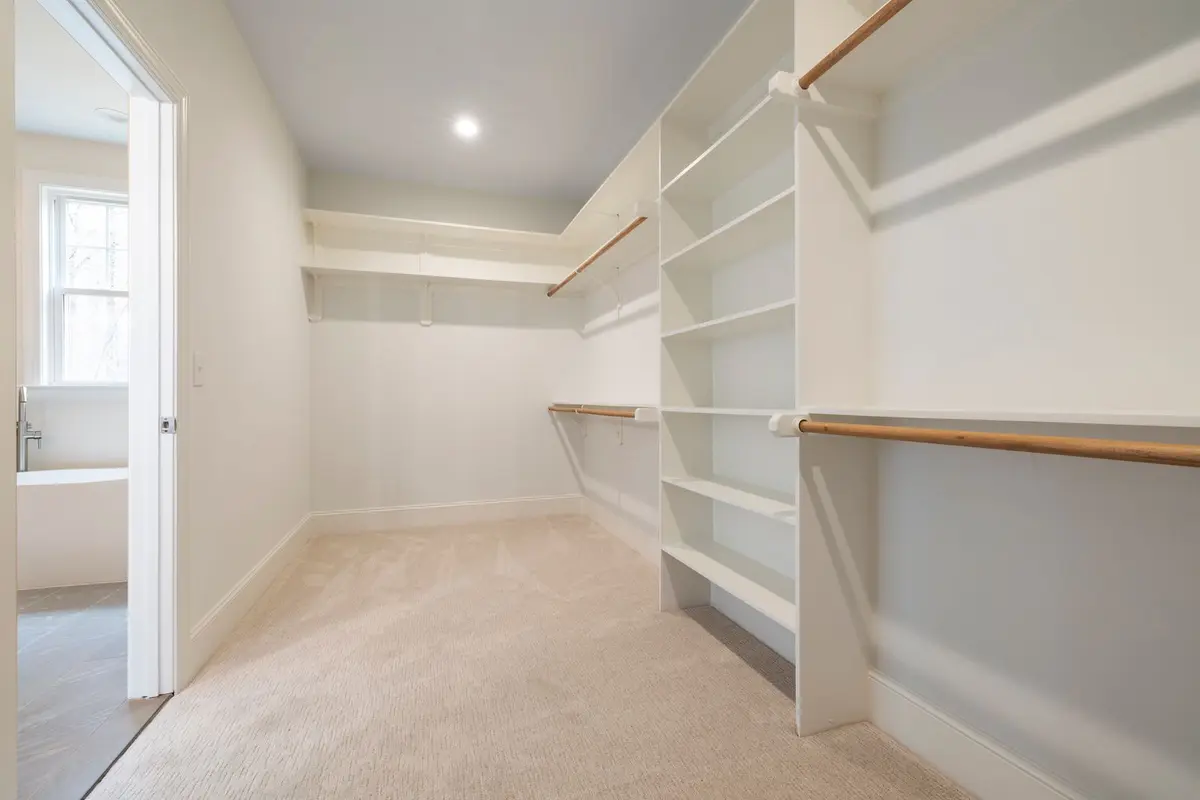
A closet packed to the ceiling hides the storage you are selling. Open each closet you will leave unlocked and look at the rod and the floor. If you cannot see both, it is too full. You do not need an empty closet. Half full reads as usable. The goal is a gap, not a staging trick.
Box what you will not wear during the weeks of showings. Out-of-season clothes and extra linens can live in a labeled bin in the garage or in a closet you will keep shut. Leave a gap on the rod about the width of a jacket, and a clear patch of floor you could set a pair of shoes on. Do the same for a linen shelf: a few folded stacks, not a wall of towels. If a shelf is bowed, that is a repair line, not a folding problem.
Do this in the coat closet, the bedroom closets you will open, and the utility closet if the water heater or the panel is in there. People look. A utility closet with a path to the panel is more useful than one stuffed with bags. Slide stored paint and loose hardware into one bin so the floor is visible. Keep chemicals upright and closed. You are not hiding the closet. You are letting someone see its size.
Check the doors after you remove the bulk. A door that would not latch because of the pile should latch now. If it still will not, the latch belongs on the function list. On photo day, shoot one closet only if it is genuinely easy to read. A dark, jammed closet is better left shut than featured. The morning of a showing, open the ones you planned to show and confirm the gap is still there.
What to do
- Open each closet you will leave unlocked and find the rod and the floor.
- Box what you will not use during showings and leave a gap.
- Fold linen into a few stacks, and clear a path in a utility closet.
- Confirm the door latches, and only photograph a closet you can read clearly.