Take one wide shot and one detail
For each main room, keep one photo that shows the whole room and one that shows a finished feature.
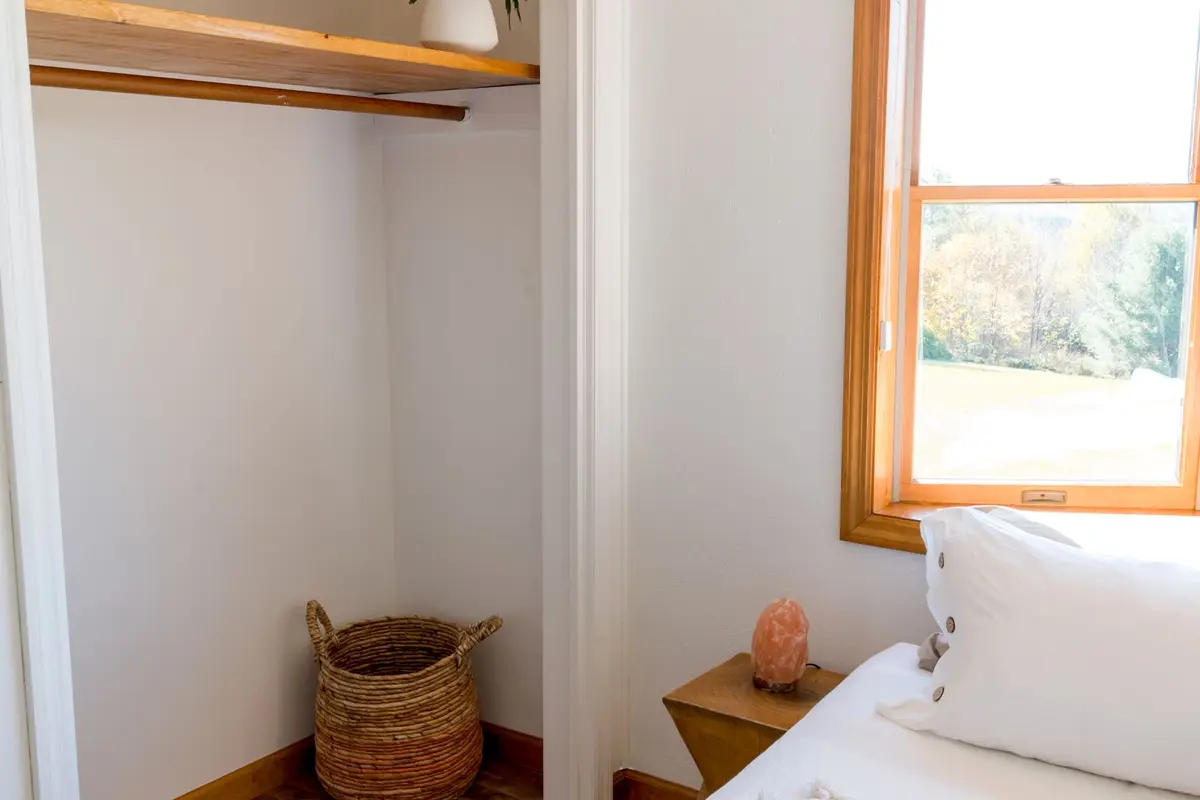
For each main room, keep two frames and be willing to delete the rest. The wide shot shows the whole room from a corner, with the camera level, so the walls do not lean. If you cannot fit the room in one frame, step back into the doorway rather than tilting up. A tilted wide shot makes a large room look like a hallway. Take that frame before you move a lamp into a prettier spot that blocks the corner.
The detail shot is one thing you finished, closer in: a repaired window, a clear counter, a made bed. It is not a second wide shot from the other corner. Pick the feature you would mention if someone asked what you did in that room. If you did not finish anything there, skip the detail rather than photographing a random object. One honest wide shot is better than a detail of clutter.
Delete frames that repeat the same angle. A short set is easier to sort than a roll of near-duplicates, and duplicates hide the one frame that was level. On a larger screen, keep the wide shot where the corners are visible and the detail where the finished work is sharp. Name them room-wide and room-detail so you do not upload five versions of the kitchen.
Do this for the main rooms only. A hallway does not need a pair. The front of the house still leads the set, and it can have its own wide shot plus one detail of something you fixed outside, such as the step or the numbers. When a room has no clean wide shot, go back and take one. Do not promote a detail to the wide slot. People need to see the size of the room before they see the faucet.
What to do
- Take one level wide shot of each main room from a corner or the doorway.
- Take one closer shot of something you finished, or skip the detail.
- Delete frames that repeat the same angle.
- Do not use a detail shot as a substitute for the wide shot.